
Hair Loss Consultation
Understanding Your Hair Loss Starts Here
If you’re here, you’re ready to look beyond what you can see and begin understanding what is influencing the changes in your hair and scalp.
A comprehensive assessment brings together your hair, scalp, health, and lifestyle to provide clarity and direction needed to move forward with informed action.
Every Hair Loss Consultation begins with a complimentary 15-minute Hair & Health Triage Call.
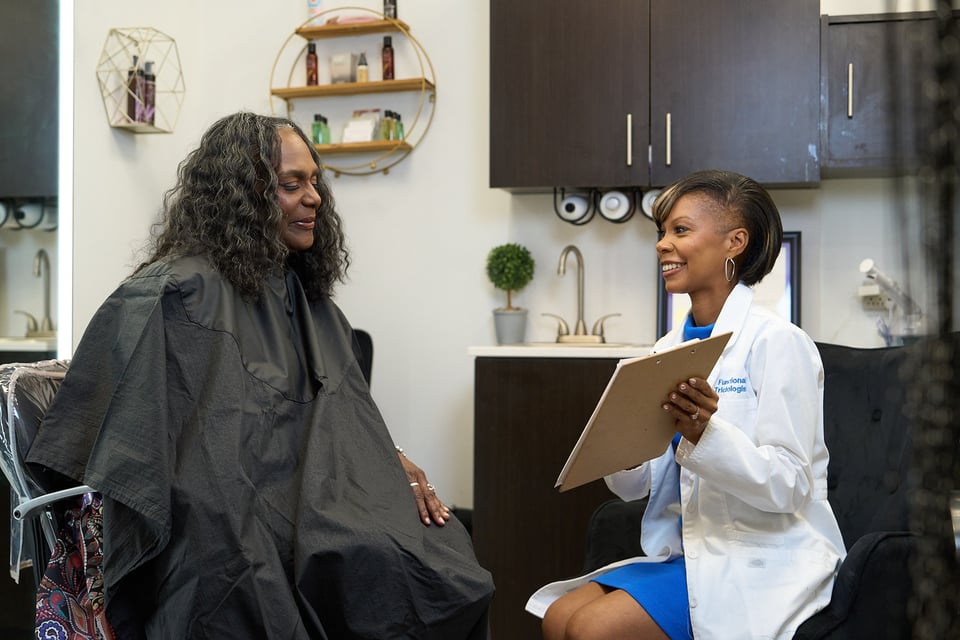
Why a Full Consultation Exists
Most women arrive having already taken action.
They’ve adjusted products. They’ve followed recommendations. They’ve tried interventions that made sense in isolation. What’s usually missing is order.
A full consultation exists to determine:
Why hair changed when it did
What the body has been compensating for
Which systems are carrying strain
And what can responsibly be addressed now
Without this structure, effort accumulates—but progress does not.
This work is guided by a single principle: decisions are made only after the body’s patterns and responses are properly organized.
The outcome is more than information. It is clarity and direction.
Direction that allows you to move forward without urgency, overcorrection, or repeated trial-and-error—grounded in a clear understanding of what the body has been managing and why.
This is the standard the work is held to.
The Types of Women This Consultation Often Serves
You do not need to fit a single category to belong here. Many women recognize themselves in more than one.
When “Hormonal Imbalance” Was Oversimplified
You may have been told your hair loss is hormonal—often interpreted as excess androgens or DHT. Hormonal imbalance is not limited to androgens.
In many cases, thinning and diffuse loss reflect blood sugar and insulin dysregulation—where metabolic strain elevates cortisol and alters hormonal activity as the body works to maintain stability.
In conventional care, this presentation is often addressed with DHT inhibitors.
What’s rarely discussed is that suppressing DHT without addressing glucose regulation can intensify hormonal disruption, prolonging hair loss rather than resolving it.
This consultation examines:
- Why hormones are shifting
- What the body is compensating for
- Whether suppression is appropriate at all
When Blood Work Was “Normal”
You may have had labs drawn—possibly multiple times. Standard panels are designed to detect disease. They are not designed to identify early dysfunction or system strain.
Broad reference ranges, isolated markers, and missing data often leave important patterns unexamined.
A full consultation determines:
- Whether existing labs provide meaningful context
- Which markers are underutilized or absent
- Whether additional diagnostics would inform recovery
This allows decisions to be made with structure rather than assumption.
When Hair Loss Followed a Major Stressor
Hair loss often appears after the body has been managing strain quietly for years. This includes:
In these cases, hair loss is not the primary issue. It is the outcome of prolonged adaptation.
This work focuses on understanding that adaptation—not overriding it.
The Consultation Experience
What Happens During a Full Consultation
This is not a protocol hand-off. It is a decision-making session.
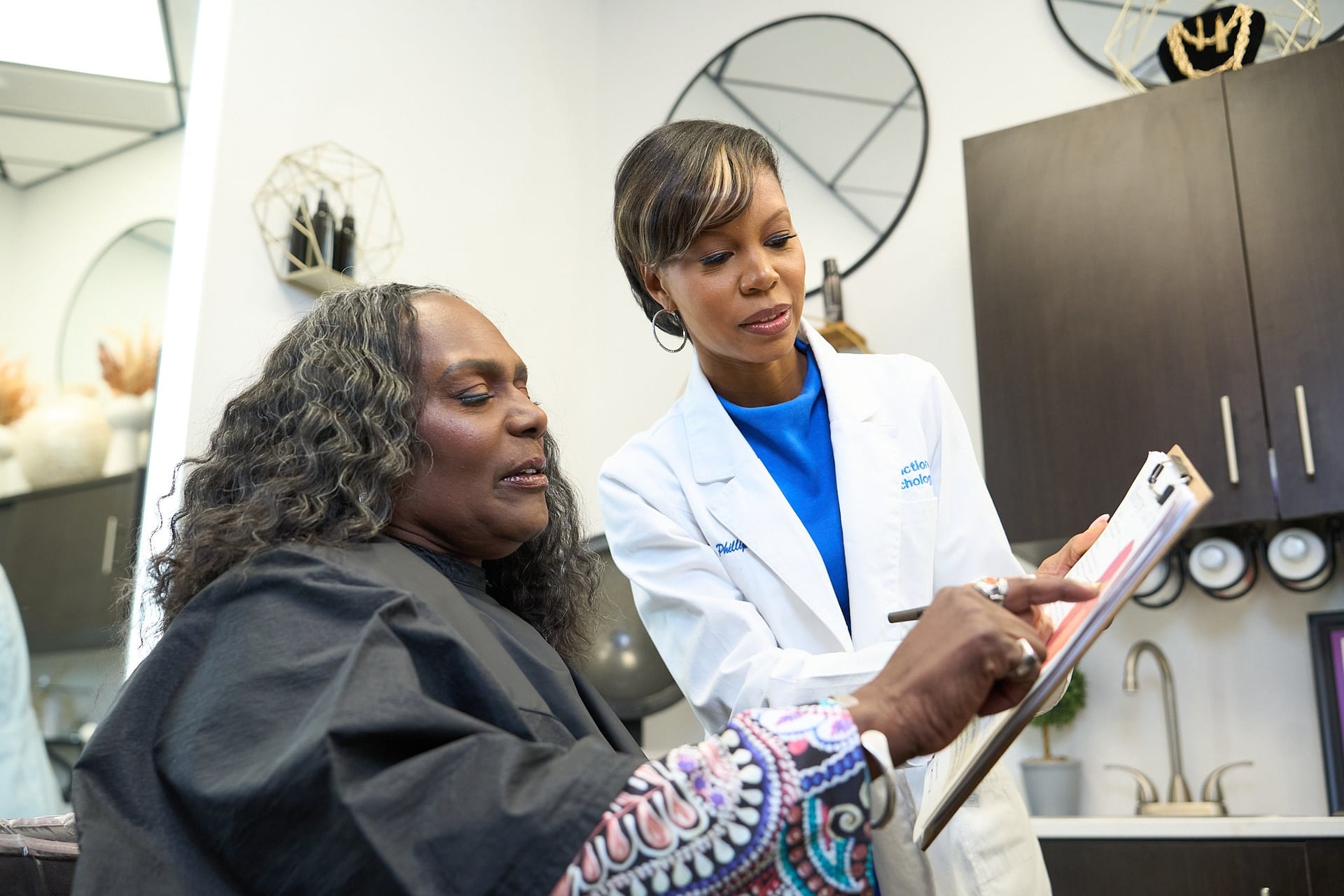
It includes:
- A detailed hair and health intake
- Review of timelines, triggers, and progression
- Scalp analysis and pattern evaluation
- Discussion of internal systems likely involved
- Determination of recovery feasibility and pacing
You leave with:
- Clarity around contributing factors
- An understanding of what the body is prioritizing
- A framework for internal and external support
- Realistic expectations around progression
Common Concerns Addressed Directly
“I’ve already tried everything.”
Most women who say this have tried interventions—supplements, prescriptions, topical therapies, dietary changes, or recommendations given without full context.
What’s usually missing is not effort, but organization.
Very few women have had their full timeline examined in sequence—when the hair changed, what the body was managing at the time, and which systems were compensating before hair was affected.
This consultation exists to organize what you’ve already done and determine why it did not resolve the issue.
“I don’t want to be sold a program.”
That concern is reasonable.
Many women arrive after being rushed into plans before anyone established whether intervention was appropriate.
A full consultation does not assume ongoing care.
Its purpose is to determine:
- Whether recovery is realistic at this stage
- What level of support would be required
- Whether proceeding makes sense now
Some women leave with direction they can implement independently. Others determine that structured support is appropriate.
That determination is made with context—not pressure.
“What if this takes too long?”
Hair loss creates urgency, especially when time feels limited.
In many cases, the body has been compensating quietly for years. Hair loss appears after that capacity is exceeded.
Early progress is often internal:
- Stabilized shedding
- Calmer scalp behavior
- Reduced inflammation or sensitivity
- Clearer pattern consistency
These shifts indicate regulation.
Growth follows regulation—not the other way around.
Acting aggressively too early often extends the timeline rather than shortening it.
“What if it’s genetic?”
Genetics influence susceptibility, not outcomes in isolation.
Expression depends on:
- Metabolic stability
- Hormonal coordination
- Nutrient availability
- Inflammatory load
- Stress recovery capacity
This work focuses on expression—and what can still be influenced.